The morning the story opens
The Tiger in the Mist
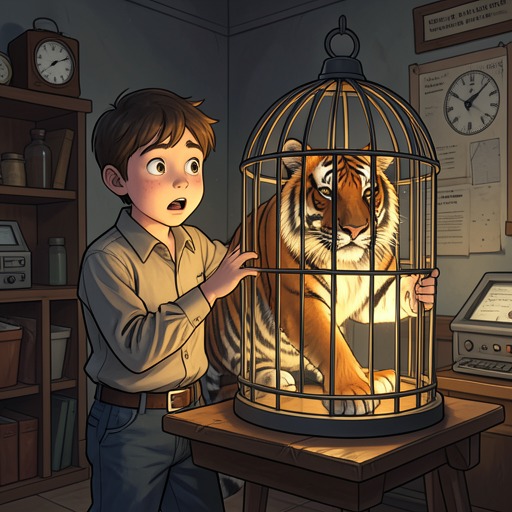
Wandering through the woods behind the [Kentucky Star Motel](entity:location-recall-location-kentucky-star-motel-47ab19e5eae8), Rob came upon the boarded-up [Beauchamp](entity:character-recall-character-beauchamp-0409a9de4270) gas station and a large tiger pacing in a cage. The animal appeared through the ground fog, brilliant orange and gold against the gray, and Rob stared only briefly before fear drove him back toward the motel.
Though his mind doubted what he had seen, his heart kept repeating the truth: tiger. The discovery gives Rob a new focus for his tightly contained thoughts and begins the story’s conflict between captivity and freedom.
The morning the story opens
The Neon Star
Rob waited for the school bus beneath the [Kentucky Star neon sign](entity:object-recall-object-kentucky-star-7d5549d3919e), a yellow star rising and falling above blue neon shaped like Kentucky. He had a faint, enduring belief that the sign might bring him luck. In his imagination, the tiger sat atop his locked suitcase of feelings, steady and untroubled.
The sign’s upward motion quietly introduces a pattern that will run through the novel: things held down may rise. For now, however, Rob uses the tiger as a shield against the rash, memories of his mother, and the coming bus ride.
The morning the story opens
The Threemongers’ Attack
[Norton Threemonger](entity:character-recall-character-norton-threemonger-ee4a0b960392) blocked Rob as he boarded the bus, mocking him as the Kentucky Star. [Billy Threemonger](entity:character-recall-character-billy-threemonger-892626bcb635) followed him to the back, insulted him, shoved him, and joined Norton in grinding knuckles into his scalp and punching his arm. The driver looked away.
Rob endured it because resistance usually made the bullying last longer. He took pride in never crying, and that morning he drew strength from imagining the tiger. His silence protects him momentarily but confirms how alone he feels at school.
The morning the story opens
Sistine Boards the Bus
The bus stopped unexpectedly, and a girl in a pink lacy dress climbed aboard. [Sistine Bailey](entity:character-recall-character-sistine-bailey-d44f221eaf87) spoke with a gravelly, clipped voice, answered the boys’ teasing sharply, and introduced herself by explaining that her name came from the [Sistine Chapel](entity:location-recall-location-fba7e68083b8). Her unusual clothes and manner made her stand out as unmistakably as Rob did.
Rob remembered the chapel ceiling from an art book in the library, especially the image of God reaching toward Adam. While the Threemongers whispered at Sistine, Rob thought about the picture, the tiger, and the strange new girl, keeping his own troubles locked away.
The morning the story opens
A Drawing of the Tiger
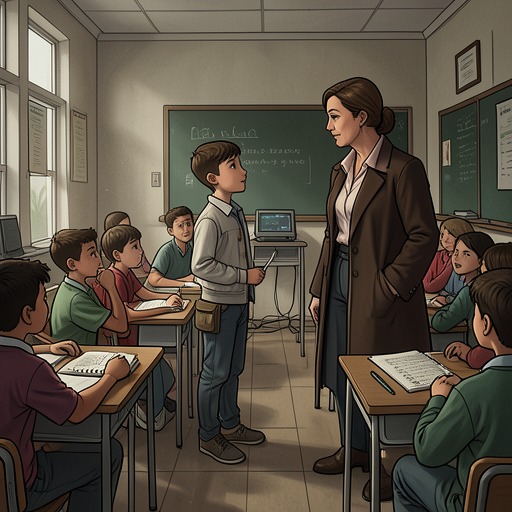
In sixth-grade homeroom, Mrs. Soames asked Sistine to introduce herself. Sistine announced that she came from Philadelphia, disliked the South, and expected her father to take her away soon. After the class laughed at the teacher’s rebuke, Sistine glared at Rob and stuck out her tongue.
Rob looked down and drew the tiger. The work recalled his mother teaching him to whittle while she was ill, telling him that his hands already knew what to do. His drawing connects his private image of the tiger to the creative skill and loving memory he has not been able to discuss.
The morning the story opens
Sent to the Principal
Mrs. Soames called Rob to the principal’s office, but he was absorbed in trying to remember the tiger’s eyes. On his way out, a classmate tripped him and insulted him, while Sistine watched with visible hostility toward the other children.
In the office, [Mr. Phelmer](entity:character-recall-character-mr-phelmer-55fffb3ffe53) questioned Rob about the rash and asked to inspect his legs. Some parents feared it might be contagious, so the principal proposed that Rob stay home for a few days while his medicine had time to work.
The morning the story opens
A Temporary Escape
Rob accepted [Mr. Phelmer](entity:character-recall-character-mr-phelmer-55fffb3ffe53)’s proposal to keep him home, carefully pocketing the note alongside his drawing. He knew the rash would not clear up, and that certainty made him smile: he believed he would never have to return to school.
For the rest of the morning, the thought buoyed him. His relief grows out of the cruelty he faces there, but it also shows how completely he has given up on changing his circumstances. The school’s decision becomes a temporary refuge rather than a cure.
The opening day, at lunch
The Fight in the Breezeway
At lunch, Rob sat outside rather than enter the cafeteria, where Norton and Billy were. Studying his tiger drawing, he saw Sistine emerge from the lunchroom surrounded by students. Someone threw an apple that struck her; she turned back toward the group rather than run.
Sistine fought with her fists and feet as the crowd closed around her. Rob stood up to see, caught sight of her crumpled pink dress, and felt the danger of the scene pull him out of his customary retreat.
The opening day, at lunch
Rob Runs for Sistine
Rob shouted for the students to leave Sistine alone, though the words surprised him as much as anyone. When the group challenged him, he saw the apple on the ground and understood that they were waiting to see what he would do. Then he ran, drawing them away from her.
He knew the feeling of being chased and ran hard enough to escape before the bell. He had dropped his tiger drawing, but he still held the principal’s note. More important, he had acted to protect someone else, even someone he thought hated him.
The opening day, on the ride home
An Unwanted Seatmate
After school, Sistine sat beside Rob on the bus because it was the last empty seat. Her dress was torn and muddy, her arm scraped, and her hair disheveled. She told him he should not run, because that was what the other children wanted.
Rob answered that he knew the [Sistine Chapel](entity:location-recall-location-fba7e68083b8) and described the ceiling paintings. Then, unusually talkative, he explained that the school had sent him home because people thought his rash might be contagious. Sistine pressed her hand against his leg and begged to catch it so she could avoid school too; Rob told her it was not a disease, just him.
The day after the opening
Homework at the Motel
Rob’s father read the principal’s note and confirmed that the rash could not spread to others. He offered to seek a doctor’s statement eventually, but agreed to give Rob a few days off first. He also told Rob to fight the Threemongers, then put him to work helping with motel maintenance.
When Rob asked whether [Beauchamp](entity:character-recall-character-beauchamp-0409a9de4270) was rich enough to own a tiger, his father dismissed Beauchamp’s claims to wealth. Rob wanted to return to the woods but stayed inside because rain could wash away the costly ointment. At supper, his father promised they would someday have a house with a real stove, while Rob pretended the overcooked macaroni tasted good.
The first night after the opening
Sistine in the Wood
Trying to carve the tiger from maple, Rob found that the wood was becoming a person instead. As he worked on the figure’s dress, he realized he was carving Sistine. He remembered his mother’s lesson that wood could reveal something unexpected and that the carver had to follow it.
That night, he dreamed the tiger was free in the woods with Sistine riding on its back. The dream joins the two figures in Rob’s imagination and gives his lonely hope of connection a shape, though he still cannot bring himself to wish openly for a friend.
The next morning, before six
The Falling Star at Dawn
Rob’s father woke him at five-thirty to work. Before leaving the room, Rob saw the Kentucky Star sign falling outside his window and thought of it as a personal shooting star. He avoided making a wish, afraid that once he began, the wishes would not stop.
Then a warm feeling rose inside him, and he named it as the tiger waiting in the woods. Rob dressed and went out despite the rain. His growing anticipation marks a first break in his habit of avoiding desire altogether.
The next morning, before work
A Song for Caroline
Outside the motel, Rob’s father complained that the rain might turn the state into a swamp. Rob said the rain did not bother him, because bright sunshine brought back the funeral: the mourners’ embraces, comments about his mother’s hair, and the ripped sleeve of his father’s suit where he had slapped Rob.
As they walked to the maintenance shed, his father began singing “Mining for Gold,” a song he had once sung with [Caroline](entity:character-recall-character-caroline-3b2c27d4184e). He stopped partway through and cursed softly. Rob fell behind, hoping to glimpse the tiger, but saw only rain and darkness before his father called him back.
The next morning
Willie May’s Diagnosis
While Rob swept the laundry room, [Willie May](entity:character-recall-character-willie-may-792d3c869d87) complained about cleaning after motel guests and warned him that he would have to stay in school if he did not want a life like hers. She gave him Eight Ball gum and asked why he was not at school. Rob said his legs had broken out.
Willie May said the cause was sadness held low in his legs and urged him to let it rise to his heart. Rob was relieved that she did not claim to cure the rash, but repeated her words as if they were a poem. Her insight gives him a new way to understand the connection between the rash and grief.
The afternoon of the next day
The Tiger Eats the Bullies
As Rob weeded outside the motel, Norton and Billy shouted from the bus that he had leprosy and that his body parts would rot off. Rob did not answer. Instead, he imagined the tiger eating them and spitting out their bones.
Sistine then walked up carrying his homework, her knuckles bleeding. Rob thanked her and tried to keep quiet, but she asked why the motel was called the Kentucky Star. Their conversation began to loosen the silence he had been trying to maintain.
The afternoon of the next day
Rob Reveals the Tiger
Sistine looked at the motel and its blinking sign as if trying to solve a problem. Rain made her hair and clothes cling to her. Seeing her hurt and determined, Rob felt something open inside him and said, “I know where there’s a tiger.”
Sistine did not laugh or doubt him; she asked where. Rob understood that he had chosen the right person to tell. The tiger becomes the first secret he deliberately shares with her, making trust possible between the two children.
The afternoon of the next day
Sistine Sees the Carvings
Rob took Sistine into his motel room to change into his clothes for the walk. She looked over the cramped room, his father’s gun case, the dirty macaroni pan, and the small collection of wood carvings beside Rob’s bed. She examined each piece carefully, including a life-size carving of his father’s foot.
When she learned Rob had made them, she called him a sculptor and an artist, comparing him to Michelangelo. She also recognized the carving of herself as a wooden mirror and called it perfect. Her response brings Rob embarrassment and joy, affirming a talent he had kept largely to himself.
The afternoon of the next day
The Walk Through the Woods
Rob gave Sistine his pants and a T-shirt, then waited outside beneath the falling neon star. For a moment he considered the wish he had buried deepest: a friend. Afraid of needing too much, he shook off the thought and set out with her toward the woods.
As they walked, Sistine explained that her mother had grown up in [Lister](entity:location-recall-location-lister-8f6b1af3dda8) and never wanted to return. Her parents had separated after her father’s affair with his secretary, and Sistine expected her father to come take her away. Rob felt loneliness settle over him, already assuming she would leave.
The afternoon of the next day
The Argument About Mothers
Sistine imagined that her mother might open an art store and sell Rob’s carvings. Rob protested that they were only whittlings and warned her to be quiet because [Beauchamp](entity:character-recall-character-beauchamp-0409a9de4270) owned the woods. When Sistine demanded to know where Rob’s mother was, he kept walking and refused to answer.
She accused him of keeping secrets after she had told him about her own family and turned back toward the motel. Wearing his clothes, Sistine seemed to Rob like a version of himself walking away. His fear of losing a possible friend finally became stronger than his wish to remain silent.
The afternoon of the next day
Rob Says His Mother Is Dead
Rob ran after Sistine and told her that his mother was dead. He managed the words in ragged breaths: [Caroline](entity:character-recall-character-caroline-3b2c27d4184e) had died. Sistine answered with a brief, businesslike nod rather than a question or a demand for details.
She stepped toward him, and the two of them turned back toward the tiger together. Rob’s disclosure is a small but decisive opening of the suitcase he has kept shut. It lets their friendship continue without requiring him to explain a grief he barely understands himself.
The afternoon of the next day
The First Visit to the Cage
The children reached a rusted chain-link enclosure roofed with boards and secured by three padlocks. The tiger was still pacing. Sistine admired its beauty and recalled the poem beginning “[Tiger](entity:creature-recall-creature-tiger-f9075f6840f1), tiger, burning bright,” while Rob warned her not to get too close.
Sistine asked why [Beauchamp](entity:character-recall-character-beauchamp-0409a9de4270) kept the tiger and insisted that it was wrong to cage such an animal. She proposed freeing it, but Rob objected that the locks made escape difficult and that it was not their tiger to release. The disagreement establishes the different ways they respond to suffering: Sistine acts, while Rob fears the consequences.
The afternoon of the next day
The Flight from Beauchamp
The tiger stopped and listened as a car approached. Rob recognized the sound and pulled Sistine away from the cage, taking her hand as they ran through the woods. She let him keep hold of it.
They laughed when Sistine scolded him for shrugging, and Rob remembered [Willie May](entity:character-recall-character-willie-may-792d3c869d87)’s comparison of his posture to a thin bird trying to fly. As they ran, he recognized the feeling rising inside him: happiness. Their escape becomes the first uncomplicated moment of shared joy between them.
The evening of the next day
A Call from the Laundry Room
Rob’s father found the children at the motel and asked where they had been. Sistine said she needed to call her mother, and Rob explained softly that the room had no phone. His father gave Rob coins for the pay phone in the laundry room; Rob handed them to Sistine and offered to accompany her, but she declined.
His father asked why Sistine was wearing Rob’s clothes. Rob said her dress was too pretty for the woods. When he returned to the room for medicine, the day’s happiness faded under the familiar darkness and memories of the bright Christmas lights [Caroline](entity:character-recall-character-caroline-3b2c27d4184e) had once hung around their home.
The evening of the next day
A Wish for Italy
While they waited outside, Rob returned Sistine’s green dress. She pointed out the Big Dipper and told him that her parents had met while looking up at the [Sistine Chapel](entity:location-recall-location-fba7e68083b8) ceiling. They had taken her there the year before, when they were still in love.
Sistine described the ceiling as more wonderful than its pictures, like fireworks, and suggested that she and Rob might go to Italy someday. Rob said that would be all right. Their talk offered him a glimpse of a shared future, even as Sistine’s impending departure and her parents’ separation remained close.
The evening of the next day
Caroline’s Name
Sistine insisted that the tiger could not look up at the stars beneath the boards over its cage and returned to her plea to free it. Then she asked how Rob’s mother had died. He answered that [Caroline](entity:character-recall-character-caroline-3b2c27d4184e) had cancer but said he was not supposed to talk about her, because his father believed discussion would not bring her back.
When headlights announced Sistine’s mother, Sistine demanded to know Caroline’s name. Rob said it softly, allowing the word to escape his locked-away thoughts. Sistine promised to return the next day to plan the tiger’s release.
The evening of the next day
Sistine Leaves with Her Mother
[Mrs. Bailey](entity:character-recall-character-mrs-bailey-09d2f1ec83f2) arrived and told Sistine to get into the car, criticizing her clothes. Sistine initially stood beside Rob, then followed her mother to the car and shouted that her mother was the liar. Mrs. Bailey called after her that she would listen only to her father, whom she called a liar herself.
Rob watched the car leave with Sistine slumped in the back seat. Afterward, alone in the darkness, he whispered [Caroline](entity:character-recall-character-caroline-3b2c27d4184e)’s name again and again. Saying it felt like tasting forbidden candy, a private act of remembrance that contradicted his father’s rule against speaking of her.
The following morning
Willie May’s Caged Parakeet
As Rob helped [Willie May](entity:character-recall-character-willie-may-792d3c869d87) fold laundry, he asked whether animals minded being kept in zoos and whether it was wrong to lock them up. She told him about Cricket, the small green parakeet her father had given her when she was young. She had held the bird and listened to it sing.
Willie May eventually released Cricket because she could not bear to see it caged. Her father beat her and warned that she had only fed a snake. She never saw the bird again, though it sometimes flew through her dreams. Her story gives Rob a painful example of the danger that can follow an attempt at freedom.
The following morning
The Shot Bird Memory
While folding a sheet, Rob remembered his father raising a gun to shoot a small bird, saying he wanted to prove that he could hit it. [Caroline](entity:character-recall-character-caroline-3b2c27d4184e) had asked why he wanted to shoot it. The shot struck the bird in midair, and it fell.
Rob remembered finding the still-warm body and crying, only to be told that a bird was nothing to cry over. The memory links his father’s gun to the family’s suppression of grief and deepens Rob’s fear that releasing the tiger could lead to its death.
Later that morning
Beauchamp’s Offer
[Beauchamp](entity:character-recall-character-beauchamp-0409a9de4270) pulled up outside the motel as Rob swept and joked that the boy was working for free. He asked whether Rob liked wild animals, then revealed that he owned one and had plans for it. Without waiting for Rob’s answer, he ordered him into the jeep and took him toward the woods.
Rob knew what Beauchamp was about to show him, but played surprised when the cage appeared. Beauchamp boasted that a man who owed him money had paid with the tiger and its cage, treating possession of the animal as proof of his own power.
Later that morning
Keys to the Tiger Cage
[Beauchamp](entity:character-recall-character-beauchamp-0409a9de4270) described his possible plans for the tiger: displaying it to attract motel customers or killing it for a coat. He complained that it needed meat twice a day and offered Rob two dollars each time he fed it. He showed Rob the small food hatch and warned him never to use the larger keys, which opened the cage door.
Rob watched Beauchamp feed the tiger, then saw the animal stare fiercely at him. Beauchamp told the tiger that Rob was its meal ticket and gave Rob the keys. On the ride back, Rob understood that Sistine would insist that the keys made them responsible for freeing the animal.
That afternoon
Sistine Demands Freedom
When Sistine stepped off the bus, she was wearing Rob’s clothes and carrying her dress in a bag. She had read about big cats and said that panthers lived in the local woods, so the tiger might survive if they released it. She ran toward the cage, and Rob followed with the keys weighing heavily in his pocket.
When Sistine said the tiger was endangered and they had to save it, Rob revealed that he had the keys and explained that [Beauchamp](entity:character-recall-character-beauchamp-0409a9de4270) had hired him to feed the animal. Sistine immediately wanted to open the locks. Rob refused, remembering [Willie May](entity:character-recall-character-willie-may-792d3c869d87)’s parakeet and fearing that the tiger would not survive outside.
That afternoon
Sistine Cries at the Cage
Sistine shook the cage and promised the tiger that she would get it out. She said she hated the place and was waiting for her father to come and free the animal with her. As she beat against the fence, she began to cry.
Rob was frightened by the sight, having never seen her cry before. Remembering how [Caroline](entity:character-recall-character-caroline-3b2c27d4184e) had comforted him, he placed his hand on Sistine’s neck and told her, [“I got you. I got good hold of you.”](entity:expression-recall-expression-i-got-you-i-got-go-839695a5632e) She continued crying without asking him to move his hand, and Rob offered her the tenderness his mother had once given him.
That evening
Willie May Names Their Pain
Rob walked with Sistine toward the laundry room so she could call her mother. [Willie May](entity:character-recall-character-willie-may-792d3c869d87) appeared beside her car and teased Rob about having company. When Sistine challenged her, Willie May recognized her anger and offered her a stick of gum; after a long silent stare, Sistine accepted it.
Willie May told the children that Rob held sorrow in his legs while anger snapped out of Sistine like lightning. She advised Sistine that nobody would come to rescue her and that she had to rescue herself. Sistine called Willie May a prophetess, and Rob believed the name fit.
That evening
The Meat Under Rob’s Bed
Rob’s father found the bag of bloody meat [Beauchamp](entity:character-recall-character-beauchamp-0409a9de4270) had given him and grew angry, believing Beauchamp was belittling him by providing spoiled food. He kicked the bag and stood before the locked gun case, staring at his rifle without opening it.
Rob could not calm his father as [Caroline](entity:character-recall-character-caroline-3b2c27d4184e) once had. He took wood and his knife outside, leaving his father alone with his anger. The moment shows how Beauchamp’s secret arrangement has entered the fragile space of the motel room and how Rob remains unsure how to help his father.
Late that evening
Cricket in the Wood
Under the Kentucky Star sign, Rob tried to carve but could not stop thinking about his father’s anger and Sistine’s tears. He remembered [Caroline](entity:character-recall-character-caroline-3b2c27d4184e) pointing out the green leaves of an oak tree, calling it the first green God ever imagined and saying that she and Rob saw the world alike.
The memory guided his hands. Rob found himself carving [Willie May](entity:character-recall-character-willie-may-792d3c869d87)’s lost parakeet, Cricket, rather than the tiger. The bird’s form emerged as if it had been waiting in the wood, turning Rob’s art into a way to preserve what had been lost and to answer Willie May’s story.
The next morning
The Wooden Cricket
Rob carried the cage keys and the wooden bird to the laundry room, where [Willie May](entity:character-recall-character-willie-may-792d3c869d87) sat smoking. Nervous about whether he had carved it correctly, he asked her to close her eyes and hold out her hand. She recognized Cricket without looking and said she did not need to see it to know what she held.
When Willie May opened her eyes, she confirmed that it was the right bird. Rob explained that his mother had taught him to work wood. Willie May said the carved bird was not the same as the living one, but it soothed her heart all the same.
That afternoon, after school
The Question of the Tiger
Sistine came off the bus with a scraped knee and swollen eye and asked where the prophetess was. She told Rob her mother had taken away his clothes and forbidden her from coming to the motel. Rob suggested that she did not always have to fight, but Sistine said she wanted to hit back and sometimes started the fights herself.
She went looking for [Willie May](entity:character-recall-character-willie-may-792d3c869d87) to ask what they should do about the tiger. Rob followed, despite [Beauchamp](entity:character-recall-character-beauchamp-0409a9de4270)’s order to keep the animal secret. Their decision to bring Willie May into the matter marks a shift from private argument to shared responsibility.
That afternoon, after school
Willie May Hears the Truth
Rob and Sistine found [Willie May](entity:character-recall-character-willie-may-792d3c869d87) vacuuming a motel room. She showed Sistine the wooden Cricket Rob had made, and Sistine responded with the wonder in her voice that Rob had come to recognize when she saw something beautiful. She then asked whether Willie May would free something big and beautiful unjustly locked in a cage if she held the keys.
Willie May asked what the children had in a cage. Rob answered that it was a tiger, taking responsibility for naming what he had found and for holding its keys. Willie May was astonished but agreed to see the animal for herself.
That afternoon, at the cage
Willie May’s Warning
The three walked through the woods in silence. At the cage, [Willie May](entity:character-recall-character-willie-may-792d3c869d87) admired the tiger’s fierce beauty and condemned [Beauchamp](entity:character-recall-character-beauchamp-0409a9de4270) for owning it. Sistine urged her to say that Rob should unlock the door, comparing the tiger’s captivity to Willie May’s decision to release Cricket.
Willie May refused to equate a bird with a tiger. She asked what would happen after the release and warned that the local animals that might once have survived there no longer did. She told the children that nothing could be done for the tiger except to let it be, even though she too wished it could rise out of the cage and punish Beauchamp.
That afternoon, at the cage
Sistine’s Father Is Not Coming
Sistine insisted that her father would come and free the tiger. Rob suddenly understood that her father was not coming and told her so, adding that he was a liar, as her mother had said. Sistine turned on Rob, calling him a liar and a sissy and saying that everyone at school hated him.
She walked away, leaving Rob wounded by words that felt like broken glass. [Willie May](entity:character-recall-character-willie-may-792d3c869d87) told him Sistine did not mean what she had said in that moment. The fight exposes the two children’s fear of abandonment: Sistine clings to the hope of rescue, while Rob sees how much their hopes can hurt.
That afternoon, after their argument
Let the Sadness Rise
[Willie May](entity:character-recall-character-willie-may-792d3c869d87) told Rob that she wished the tiger could rise out of the cage and attack [Beauchamp](entity:character-recall-character-beauchamp-0409a9de4270), who had put Rob in the middle of the situation. She took Rob’s hand and led him away. Her words brought back her earlier lesson that sadness had to rise from his legs toward his heart.
Thinking of the tiger’s captivity alongside his own buried grief, Rob understood that he had to act. He left Willie May at the motel and ran down the highway after Sistine, choosing to confront both the cage and the silence between them.
Later that afternoon
Rob Reconciles with Sistine
Rob caught sight of Sistine’s orange dress with pink dots on the horizon and called her name until she stopped. He told her he had come to speak about the tiger and said he was going to let it go. He held up the keys, declaring that he would do it for her.
Sistine doubted that he would follow through, but the gesture began to repair their rupture. Rob had moved from keeping the keys as a secret to accepting the choice they represented, while Sistine’s insistence had helped him act beyond his fear.
Later that afternoon
Beauchamp on the Road
Before the children could return to the cage, [Beauchamp](entity:character-recall-character-beauchamp-0409a9de4270) drove up in his jeep and teased Rob about chasing girls. He offered more meat and reminded Rob of their business deal and the requirement to keep it secret. Rob concealed the keys and answered politely.
Sistine smiled sweetly and gave Beauchamp the name “Sissy,” concealing her hostility. After Beauchamp drove away, she said that he was afraid of the tiger and had made Rob feed it because he was frightened himself. Rob recognized that this was true, another thing he had known without admitting it.
Later that afternoon
The Locks Open
Rob apologized to Sistine for saying her father was not coming. Sistine refused to discuss him and returned to the tiger, insisting that the animal mattered. At the cage, Rob put the first key into a lock and found that it turned easily; he opened all three locks and handed them to Sistine.
When Sistine told him to open the door, Rob asked what would happen if the tiger ate them. She argued that it would leave them alone out of gratitude. Rob flung the door wide, and they jumped back, waiting for the animal to notice its freedom.
Later that afternoon
The Tiger Runs Free
The tiger ignored the open doorway and continued pacing. Sistine shook the fence and shouted for it to leave; Rob joined her, shaking the cage and yelling until the tiger finally stepped outside. It sniffed the air, paused, and then ran through the grass.
The tiger’s strength and speed made the cage seem impossible in retrospect. Sistine said freeing it was the right thing to do. Rob nodded, but a flash of green brought back [Willie May](entity:character-recall-character-willie-may-792d3c869d87)’s warning and the memory of Cricket, leaving him uncertain whether freedom would save the animal.
Moments after the release
The Shot in the Woods
A voice from the motel called Rob’s name; it was his father. [Willie May](entity:character-recall-character-willie-may-792d3c869d87) cried out, and then a gunshot cracked through the woods. Rob and Sistine stood stunned. Willie May ran to them, stopped when she saw both children alive, and thanked Jesus.
She led them back toward the motel. The gunshot transformed their act of liberation into a terrible consequence, and Rob could not yet know whether the tiger had escaped or been hit. The danger of release that Willie May had feared had arrived at once.
Moments after the gunshot
Rob Faces His Father
Rob saw the tiger lying on the ground and his father standing over it with the rifle. He accused his father of killing his tiger, then attacked him with his fists and feet. His father remained still, holding the gun above his head and taking the blows without striking back.
Realizing that hitting could not express what he felt, Rob opened the suitcase of words he had kept shut. He shouted that he wished his father had died instead of [Caroline](entity:character-recall-character-caroline-3b2c27d4184e), that he hated him, and that he needed his mother. The outburst gave voice to the grief that had been driving his silence and anger.
Moments after Rob’s outburst
Caroline’s Name Between Them
Rob demanded that his father say [Caroline](entity:character-recall-character-caroline-3b2c27d4184e)’s name. Robert whispered it while still holding the rifle overhead. The sound seemed to restart the world; he lowered the gun and pulled Rob close, repeating her name.
Rob told his father that he needed his mother. Robert answered that he needed her too, but that they had only each other and would have to learn to make do. Rob began to cry, and his father wiped tears from his own eyes. Their shared grief broke through the family rule that had kept Caroline’s name and their sorrow unspoken.
Moments after the reconciliation
The Tiger’s Last Touch
[Willie May](entity:character-recall-character-willie-may-792d3c869d87) held Sistine and rocked her while Rob approached the tiger. She explained that she had gone to fetch his father because she had guessed what Rob planned to do and feared the tiger might harm him. Rob acknowledged her explanation, then knelt beside the dead animal.
Sistine urged him to touch the tiger. Rob placed a hand on its head as tears rose again, and Sistine touched it too, saying it was one of the prettiest things she had ever seen. Their shared grief gave the tiger a place in their lives beyond the failed promise of rescue.
Later that day
A Funeral in the Rain
Rob and his father dug a grave large enough for the tiger while rain fell. Sistine recited the lines of “The Tyger” she could remember, and Rob listened with his eyes closed. When she asked him to say something, he could manage only that he had loved the animal.
[Willie May](entity:character-recall-character-willie-may-792d3c869d87) placed the wooden Cricket on the tiger’s body, offering the lost bird as company. Rob’s father said he had shot the tiger for Rob and apologized. Rob leaned into him, then helped cover the grave with dirt; sunlight appeared on his arm as the burial ended.
After the burial
Best Friends at the Grave
Sistine apologized for urging Rob to release the tiger, saying it would still be alive if she had not made him do it. Rob said he was not sorry for what he had done. She proposed a headstone and fresh flowers for the grave each day.
Sistine took Rob’s hand and told him she had not meant what she said about him being a sissy or that she hated him; he was her best friend. Rob held her hand on the walk back to the motel, feeling both its smallness and the comfort it gave him. He felt lighter, as though he had set down something heavy.
That night
A Song After the Grief
As Robert applied the medicine to Rob’s legs, he sang “Mining for Gold,” the song he had once sung with [Caroline](entity:character-recall-character-caroline-3b2c27d4184e). When he finished, he said that Caroline had loved it. Rob told him that he liked it too.
His father said Rob would have to tell [Beauchamp](entity:character-recall-character-beauchamp-0409a9de4270) that he had released the tiger, while Robert would admit to shooting it. Rob agreed and offered to work to repay what he had done. The conversation shows the two of them beginning to speak plainly, even as they face the practical consequences of their actions.
That night
School and Beauchamp Await
Robert told Rob that he would call [Mr. Phelmer](entity:character-recall-character-mr-phelmer-55fffb3ffe53) on Monday and send him back to school rather than take him to more doctors. Rob did not mind; Sistine would be there. His father also admitted that speaking about [Caroline](entity:character-recall-character-caroline-3b2c27d4184e) hurt, but promised to try for Rob’s sake.
Rob looked at his father’s hands and understood them as complicated: they had held the gun that killed the tiger, applied the medicine, and held him while he cried. When his father asked about supper, Rob said macaroni and cheese sounded good, a small sign of renewed openness between them.
That night
The Bird in the Sky
Rob dreamed that he and Sistine waited at the tiger’s grave. A flutter of green wings emerged: Cricket, no longer made of wood, flew up from the grave as they chased him, laughing. The bird rose into a sky like the [Sistine Chapel](entity:location-recall-location-fba7e68083b8) ceiling and disappeared among its figures and colors.
Sistine said in the dream that she had told him it was like fireworks. Rob woke smiling, able to imagine a future in which loss could lead not only to grief but also to wonder, memory, and shared joy.
The following morning
A Clear Morning
Rob’s father called out that there was not a cloud in the sky. Rob watched sunlight push through the motel-room curtain and thought about Sistine and the tiger he wanted to carve for her, considering what wood to use and how large the sculpture should be.
Outside, the [Kentucky Star neon sign](entity:object-recall-object-kentucky-star-7d5549d3919e) rose and fell bravely beside the morning sun. Rob could now think about the future and make something for a friend, no longer relying on the tiger as a lid for everything painful inside him.